Contents
Introduction
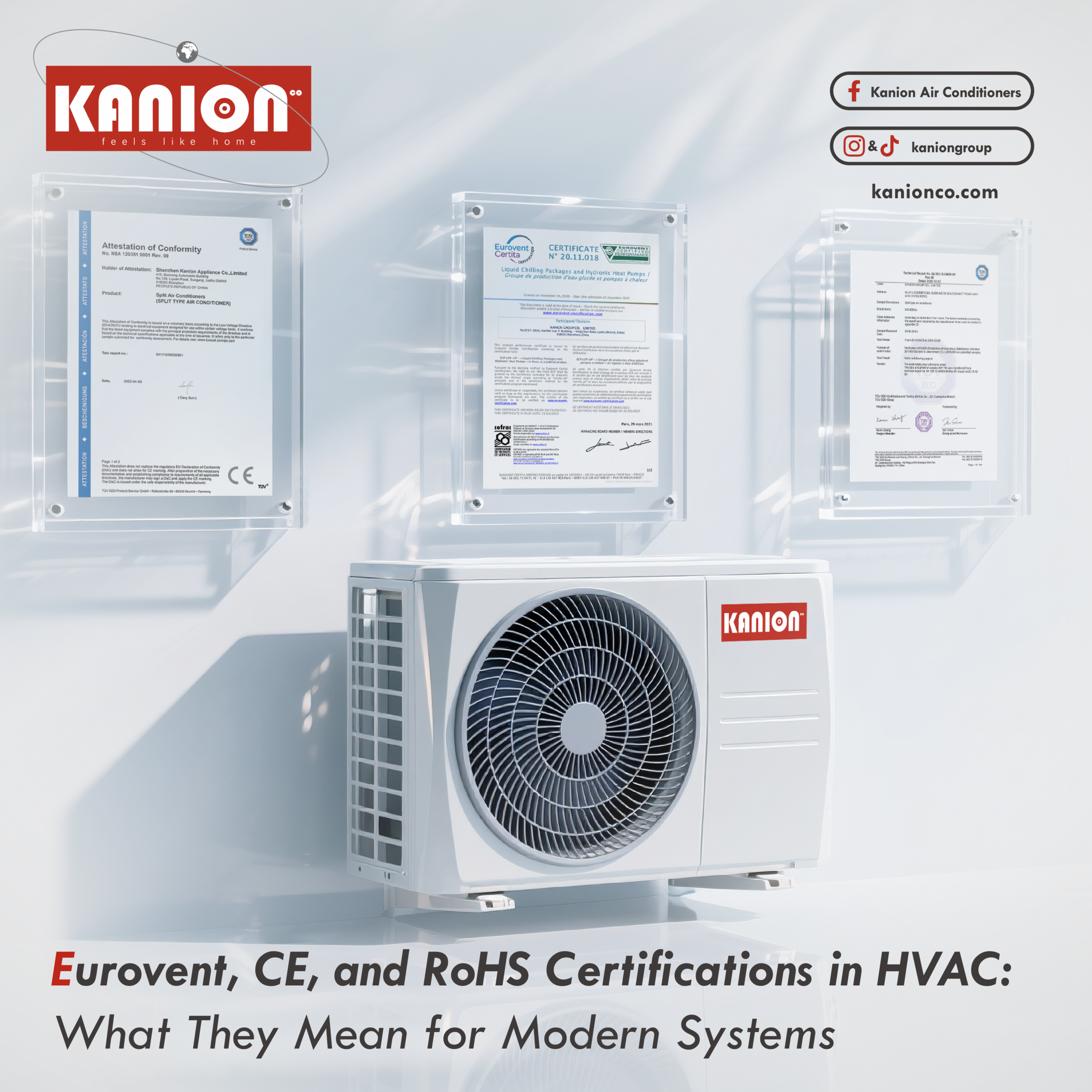
When choosing an HVAC system in Europe, certifications are more than a formality—they are a sign of trust. Among the most important are CE marking, Eurovent certification, and RoHS compliance. These standards protect end-users, guide project planners, and ensure that equipment performs as promised.
CE Marking: The Legal Requirement
The CE mark is mandatory for all HVAC products sold in the EU. It ensures compliance with strict rules on safety, health, and environmental protection. For customers, this means peace of mind—knowing that the equipment is legally approved and safe to operate.
Eurovent Certification: Verified Performance
Eurovent certification is voluntary, but it provides strong reassurance. Products are tested by an independent body to verify energy efficiency, heating and cooling capacities, and noise levels. This matters for customers who want transparent performance data before making an investment.
For example, choosing a Eurovent-certified heat pump allows homeowners and businesses to trust that the advertised efficiency will translate into real-world energy savings and lower operating costs.
RoHS Compliance: Safer and More Sustainable
RoHS (Restriction of Hazardous Substances) limits the use of harmful materials like lead and mercury in HVAC electronics. This makes systems safer for users, while also reducing environmental impact during manufacturing and disposal. Customers increasingly value this, especially in markets where sustainability goals and green building certifications are part of the decision-making process.
What Customers Should Consider Beyond Certifications
While CE, Eurovent, and RoHS provide important safeguards, customers often weigh additional factors when choosing HVAC equipment:
- Energy bills– Verified efficiency directly affects monthly costs.
- Reliability– Systems with proven certifications are less likely to underperform or fail prematurely.
- Regulatory compliance– Certified products are easier to approve in building projects and may qualify for energy subsidies or rebates.
- Maintenance and support– Equipment that meets recognized standards is typically easier to service, with better spare part availability.
Certified HVAC Solutions
For the best results, customers should look for HVAC systems that combine CE marking and RoHS compliance as a baseline, and Eurovent certification as an added assurance of quality.
FAQ
- Is CE marking required for all HVAC products?
Yes. Without it, HVAC equipment cannot legally be sold or installed in the EU. - Is Eurovent certification worth paying attention to?
Yes. It is voluntary, but it verifies performance data that directly affects comfort, efficiency, and energy bills. - Why does RoHS matter for HVAC buyers?
It guarantees that electronic parts are safer and free from hazardous substances, supporting both health and sustainability. - How do these certifications impact project approvals?
Certified products simplify building compliance checks and may be necessary for government incentives. - Do certified systems reduce long-term costs?
Yes. Verified efficiency reduces operating expenses, while safety and quality standards lower the risk of failures. - Can uncertified products be cheaper upfront?
Sometimes, but they often lead to higher energy bills, shorter lifespans, and compliance risks.