Contents
For decades, air conditioning in Europe was often viewed as a luxury rather than a necessity. Compared with hotter regions such as the Middle East, Southeast Asia, or parts of North America, most European countries historically maintained relatively low residential air conditioner adoption rates.
That perception is now changing rapidly.
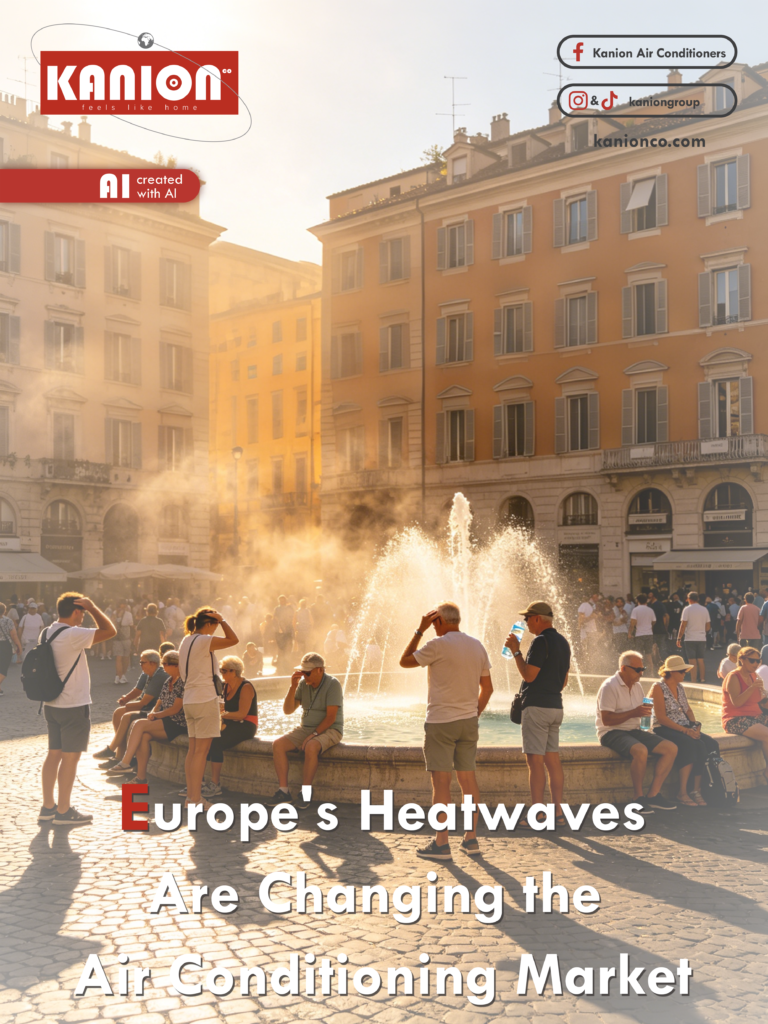
As Europe faces more frequent and intense heatwaves, rising summer temperatures, and increasing pressure on public health systems, cooling is quickly shifting from optional comfort to a practical necessity for millions of households and businesses.
Yet this growing demand also creates a complex challenge — often referred to as the “Cooling Paradox.”

Europe’s Changing Relationship with Air Conditioning
Recent heatwaves have significantly altered both public and policy attitudes toward cooling. Countries such as the United Kingdom, Germany, and the Netherlands — traditionally low-adoption markets — are experiencing steadily rising demand as summers become increasingly difficult to manage without mechanical cooling.
Many European buildings were not originally designed for extreme heat:
- Older structures often lack proper insulation or cooling infrastructure
- Urban heat island effects intensify temperatures in dense cities
- Historic buildings present unique installation challenges
As a result, demand for residential and light commercial air conditioning is expanding across Southern, Central, and Northern Europe. The discussion now extends beyond comfort to include health, productivity, and urban resilience.
The Cooling Paradox perfectly illustrates the complex challenge Europe is facing.
The paradox is clear yet difficult to resolve:
- Rising temperatures drive higher cooling demand
- Higher demand increases electricity consumption
- Increased energy use can lead to greater carbon emissions
- These emissions contribute to further global warming
At the same time, traditional high-GWP refrigerants, particularly older HFC-based options, face tightening scrutiny under the EU’s evolving F-Gas regulations. As a result, cooling is no longer viewed solely as a consumer appliance issue, but as part of a broader energy and climate policy discussion.
Why Europe Faces a Unique Challenge
Europe must balance growing cooling needs with ambitious climate goals. This transition is complicated by:
- Strict EU environmental and energy efficiency regulations
- High electricity prices
- Architectural and heritage-related installation constraints
- Growing focus on cooling equity for vulnerable populations
In many cities, installing outdoor units often requires compliance with building aesthetics, structural rules, or community approvals.
The Industry Response: Toward Smarter and Cleaner Cooling

The HVAC industry is responding with accelerated innovation in sustainable technologies:
- High-Efficiency Inverter Systems: Variable-speed compressors that adjust output in real time, significantly reducing energy consumption.
- Lower-GWP Refrigerants: Wider adoption of options such as R32 and R454B to meet stricter F-Gas requirements.
- Smart Controls and Energy Management: IoT-enabled systems and intelligent scheduling to minimize peak-load usage.
- Seasonal Efficiency Focus: Greater emphasis on real-world performance metrics like SEER and SCOP.
Kanion Co’s Approach in Europe
Among manufacturers addressing the Cooling Paradox in Europe, Kanion Co focuses on high-efficiency inverter air conditioning solutions designed for regulatory compliance and long-term performance.
Kanion Co’s European range features:
- A+++ Energy Efficiency Rating— the highest EU standard
- R32 and R454Blow-GWP refrigerants for reduced environmental impact
- Advanced DC inverter technology for superior energy savings
- Quiet operation suitable for urban residential settings
- Smart control compatibility for optimized energy management
These solutions are engineered to help European customers meet strict F-Gas regulations while delivering reliable cooling with minimal energy consumption.
Looking Beyond “More Cooling”
The future of air conditioning in Europe will not be measured simply by the number of units installed. The real challenge lies in delivering cooling solutions that are:
- Energy efficient
- Environmentally responsible
- Economically sustainable
- Adaptable to future climate conditions
Final Thoughts
The Cooling Paradox captures a central dilemma of 2026: the world needs more cooling to adapt to climate change, yet cooling technologies themselves must evolve to avoid exacerbating the problem.
For Europe, this means the path forward depends not just on expanding access to air conditioning, but on making cooling significantly smarter, cleaner, and more energy efficient for the decades ahead.