Contents
Why Data Center Cooling Matters More Than Ever
Data center cooling is becoming one of the most important topics in the future of HVAC. As artificial intelligence grows, digital infrastructure expands, and electricity demand rises, cooling is no longer only about indoor comfort. It is also about managing continuous heat, protecting system performance, and supporting long-term energy efficiency.
For the HVAC industry, this shift matters far beyond server rooms. Data centers show where cooling technology is heading: toward higher thermal loads, longer operating hours, stronger efficiency expectations, and smarter control. As digital infrastructure becomes more critical, data center cooling is becoming a clear signal of how the wider cooling market is evolving.
At Kanion Co, we see this as a broader market direction. The future of HVAC will depend not only on capacity, but also on how efficiently cooling systems respond to rising demand, continuous operation, and more complex thermal conditions.
Key Takeaways About Data Center Cooling
Data center cooling matters because data centers concentrate large amounts of computing power in one place, which creates constant heat that must be managed reliably thermal management is essential for stable operation. As AI workloads become denser and digital systems run around the clock, the role of cooling becomes more strategic.
This trend is important not only for large digital facilities, but also for the wider HVAC market. It shows that cooling is becoming more closely tied to uptime, efficiency, energy use, and technology performance. In other words, data center cooling is no longer a niche topic. It is becoming part of the bigger conversation about the future of HVAC.
Q&A: Quick Answers About Data Center Cooling
Q1: Why is data center cooling becoming more important?
Data center cooling is becoming more important because data centers generate continuous heat and need reliable thermal management to maintain stable operation.
Q2: How does AI affect data center cooling?
AI increases computing demand, which raises heat density and makes data center cooling more important for performance and efficiency.
Q3: What does data center cooling mean for the HVAC industry?
It means cooling is becoming more strategic, more efficiency-focused, and more closely linked to long-term energy performance.
Trend 1: Cooling Infrastructure Is Becoming Core to Digital Systems
In the past, cooling was often discussed mainly in the context of comfort for homes, offices, and commercial spaces.Today, modern cooling infrastructure is changing that view. In digital infrastructure, cooling is not just support equipment. It is part of the infrastructure itself.
Without effective thermal management, data centers cannot maintain reliability, efficiency, or continuous operation. That makes data center cooling essential to performance, not secondary to it. As more facilities operate around the clock and process larger workloads, cooling becomes a foundation for digital continuity.
For the wider HVAC market, this is an important signal. It suggests that future cooling systems will increasingly be judged by how well they handle constant demand, high thermal density, and strict performance expectations.
Trend 2: AI Growth Is Raising the Value of Smarter Cooling
Artificial intelligence is increasing the need for denser and more powerful computing environments. Training models, running inference, and supporting AI-enabled digital services all require significant processing power. More processing power means more heat, and more heat makes thermal management more critical.
This is one of the clearest reasons why cooling is becoming more strategic. In the past, cooling could be treated as a background system. In AI-driven environments, data center cooling becomes part of the performance equation. Smarter thermal management supports more stable operation, lower waste, and stronger long-term efficiency.
For HVAC professionals, this trend matters because it changes how cooling technology is valued. Efficient cooling is no longer just about reducing energy waste. It is also about supporting systems that cannot afford instability, downtime, or excess heat.

Trend 3: Rising Electricity Demand Is Making Efficient Cooling More Strategic
The growth of data centers is happening at the same time as broader electricity demand continues to rise. That makes data center cooling even more important. More power is flowing into systems that create heat, and more sectors are depending on cooling for longer operating hours.
This changes the cooling conversation in a major way. Efficient cooling is no longer only a cost-saving measure. It is becoming a strategic response to rising thermal demand, higher operating pressure, and growing energy expectations. As electricity demand increases, users are more likely to evaluate cooling systems based on long-term performance, efficiency, and lifecycle value.
That is why data center cooling matters beyond digital infrastructure itself. It reflects a larger market direction: cooling systems will increasingly need to deliver stable performance under more demanding real-world conditions.
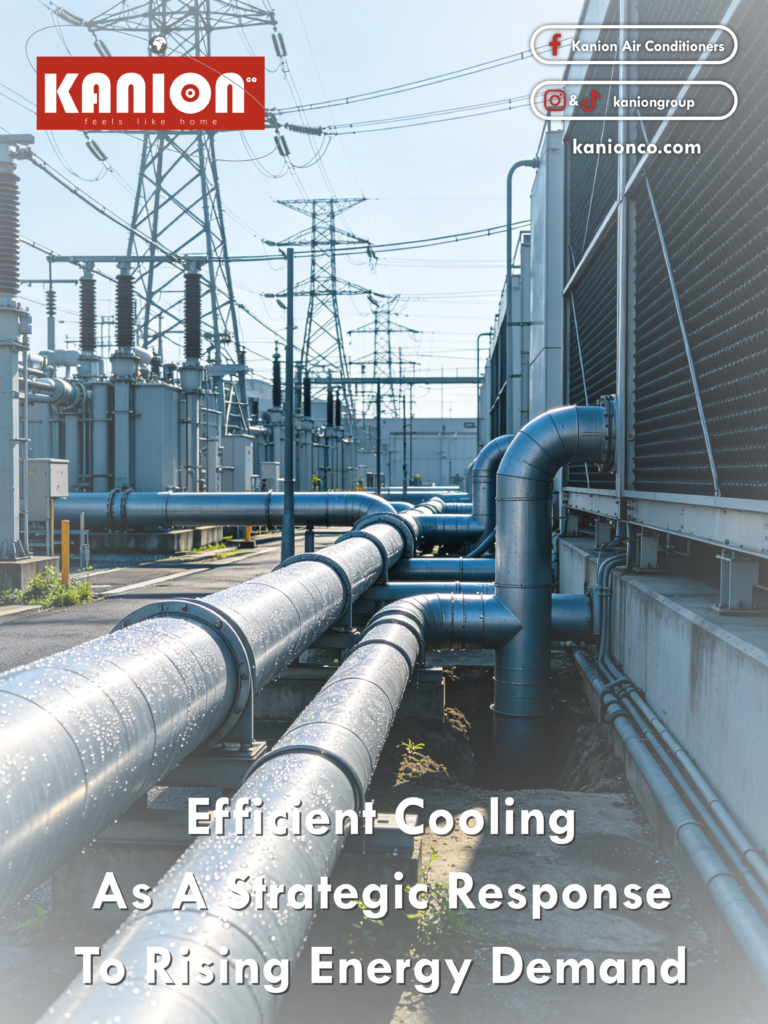
What Data Center Cooling Signals for the Future of HVAC
Data center cooling offers a clear view of where the HVAC industry is heading. The market is moving toward stronger thermal control, better efficiency, smarter system response, and higher expectations for continuous performance.
This does not mean every HVAC application will look like a data center. But it does mean the standards shaping digital infrastructure are influencing how the wider cooling industry thinks about reliability and efficiency. As loads increase and energy use comes under greater scrutiny, cooling systems will need to do more than simply operate. They will need to perform intelligently.
At Kanion Co, we see this as a meaningful shift for the future of HVAC. Better cooling design, stronger efficiency performance, and smarter thermal control will matter more across many applications, not only in highly technical environments.
Conclusion: Strategic Cooling Is Redefining the HVAC Industry
Data center cooling is becoming one of the clearest indicators of how the cooling industry is changing. As AI expands, electricity demand rises, and digital infrastructure becomes more central to daily life, cooling is becoming more strategic, more essential, and more closely tied to long-term performance.
For the HVAC industry, this is a trend worth watching closely. The future of cooling will be shaped by higher loads, better efficiency expectations, and smarter thermal management. Data center cooling is not just part of that future. It is already helping define it.
FAQ
Q1: What is data center cooling?
A1: Data center cooling refers to the systems and strategies used to manage heat in data centers so equipment can operate reliably and efficiently.
Q2: Why is data center cooling important for HVAC trends?
A2: It shows how cooling is becoming more strategic, especially as thermal loads, uptime demands, and energy expectations continue to grow.
Q3: Does AI increase the need for data center cooling?
A3: Yes. AI-driven computing creates more heat, which increases the importance of effective thermal management.
Q4: What does data center cooling mean for future cooling technology?
A4: It highlights the growing value of efficient, stable, and smarter cooling systems across the wider HVAC market.