Contents
Executive Summary: Why a Single Missing "+" Means Immediate Disqualification in 2026 European Commercial Bids
Under the combined pressure of unprecedented 46°C summer heatwaves and the strict enforcement of the official EU F-gas Regulation (EU) 2024/573 framework, the evaluation criteria for European HVAC tenders have fundamentally shifted. Procurement committees no longer prioritize theoretical full-load efficiency. Instead, they evaluate grid resilience during extreme peak demand and actual carbon displacement under part-load conditions.
Submitting a proposal capped at an A++ rating introduces three critical red flags to auditors: immediate regulatory non-compliance risks upon building completion, compromised corporate tenant retention due to high Scope 2 indirect emissions, and inflated Lifecycle Costs (LCC). Upgrading commercial specifications to an A+++ energy rating coupled with next-generation low-GWP refrigerants (R32/R454B) is no longer a premium marketing choice; it is the baseline requirement to secure up to 30% of the ESG-driven points on modern institutional scorecards.
If you have been managing European HVAC tenders recently, you have likely noticed that the ground rules have shifted entirely.
If you ask a competing contractor today, “How are you speccing the equipment for this bid?” they will most likely answer with confidence: “We are packing A++ systems across the board. It is green, it is efficient, and it keeps our pricing competitive.”
Whenever we encounter this mindset in the field, we prefer to lay out the hard industry truth: In 2026, missing that single third “+” means your proposal will likely be eliminated during the very first round of technical screening.
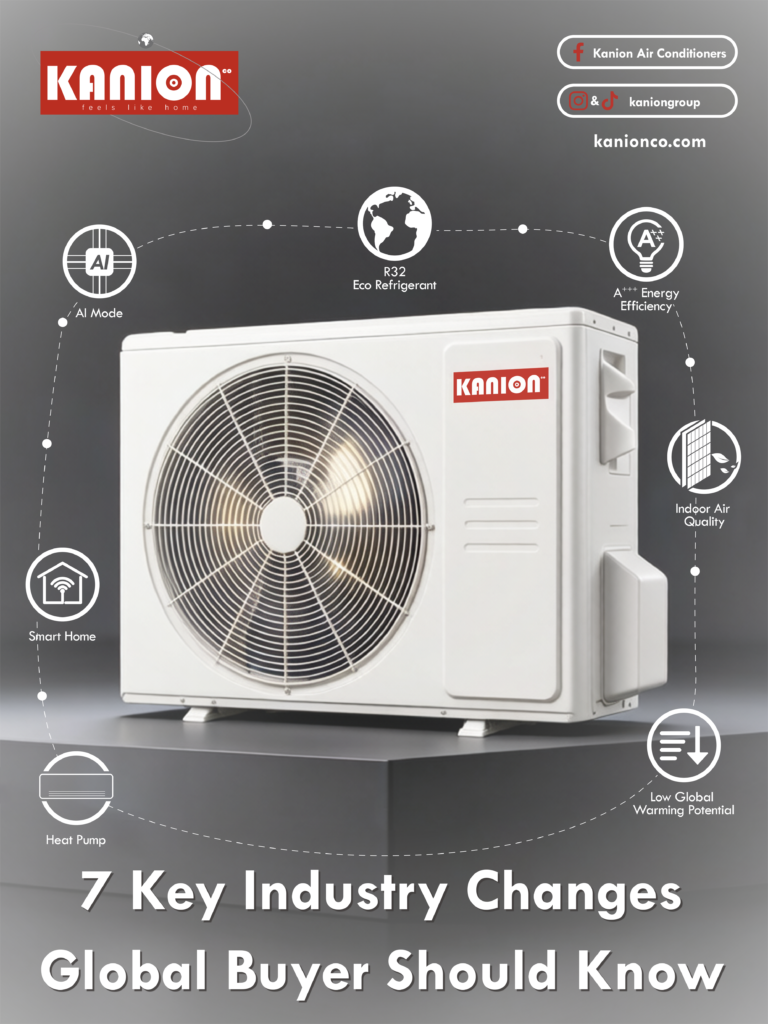
The reality on the ground leaves no room for compromise. With European summer temperatures regularly peaking at a blistering 46°C, emergency cooling demands are pushing local power grids to the absolute brink of failure. Under this level of climate volatility—and the aggressive ESG audits that accompany institutional investments—an A+++ energy rating has transformed from a premium marketing asset into a non-negotiable legal and operational bottom line required to win high-value commercial contracts.
Let us isolate the engineering and financial facts regarding why that one extra “+” serves as the definitive tool for dominating upcoming 2026 HVAC procurements.
46°C Under Pressure: Winning European HVAC Tenders Despite the Part-Load Trap
Many developers still treat energy labels like traditional school grades, assuming that because an A++ system delivers a high Seasonal Energy Efficiency Ratio (SEER), moving up to A+++ represents an unnecessary, low-return capital expenditure.
In the modern commercial bidding landscape, this assumption is the fastest way to lose a contract.
To render a technical proposal bulletproof against auditor scrutiny, one must examine how commercial cooling infrastructure actually behaves during a sustained heatwave. When extreme ambient temperatures paralyze a metropolitan area, commercial HVAC systems do not simply run at 100% maximum capacity all day. Due to shifting indoor occupancies, zone-based thermostatic controls, and minor variations between morning and evening ambient temperatures, commercial systems actually spend over 90% of their operational life running at partial capacity—commonly referred to as part-load conditions.
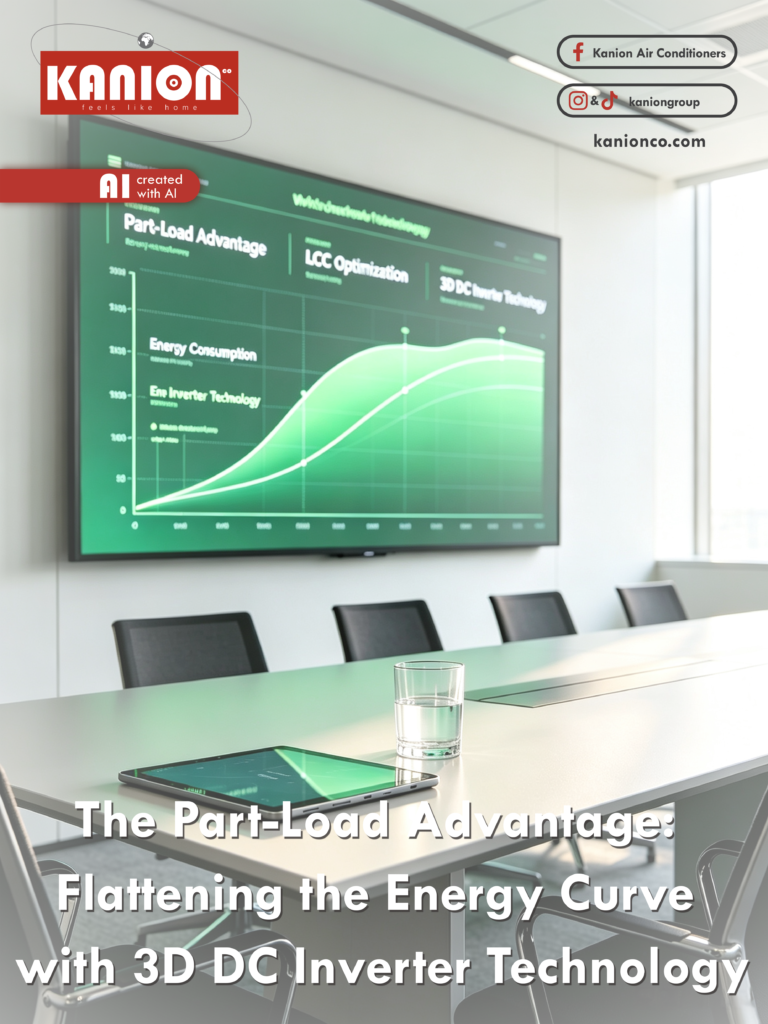
This is precisely where standard A++ infrastructure hits a technical bottleneck. When forced to make micro-adjustments to match minor fluctuations in cooling demand, standard systems operate rigidly. They rely on frequent, aggressive compressor start-stop cycles. During a 46°C heatwave, this continuous restarting creates massive, sudden power spikes. Not only does this inflate the building’s Scope 2 carbon footprint, but it also introduces an acute operational risk of tripping localized electrical grids that are already severely strained.
This operational vulnerability is why specifications for European HVAC tenders are rapidly shifting toward advanced systems driven by 3D DC Inverter Technology and next-generation low-GWP R32 and R454B refrigerants. Instead of generating grid-straining power surges, these systems intelligently modulate compressor frequency down to micro-levels. They draw minimal current to sustain a perfectly unvarying indoor climate. When the tender auditing committee reviews your Decarbonization Blueprint, they are presented with a completely smooth energy performance curve, leaving no technical justification to dock your proposal’s engineering score.
Engineering the Scorecard: Capturing 30% More Points in European HVAC Tenders
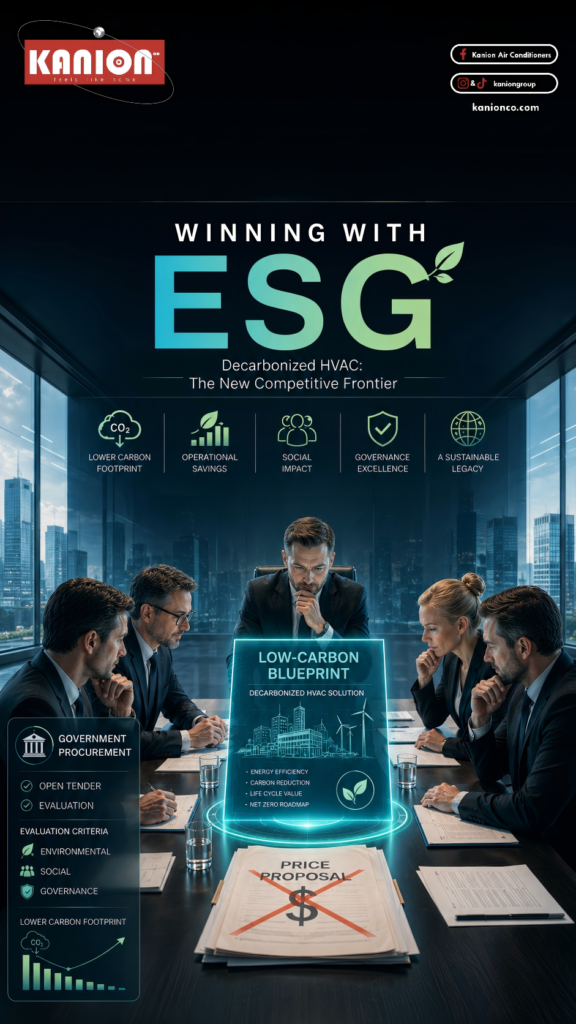
Government procurement officers, institutional funds, and commercial landlords have moved past the era of awarding contracts based solely on the lowest hardware quotation. Terrified by rolling blackouts and the threat of grid penalties during recent summer spikes, they utilize strict, standardized ESG scorecards. In major European commercial markets, grid resilience and extreme climate adaptation fields now dictate between 20% and 30% of the total weighted tender score.
Relying on an A++ submission hands the auditing panel three distinct reasons to reject a bid:
First, the risk of structural regulatory non-compliance. Environmental frameworks are shifting faster than construction timelines. Under the accelerated phase-down schedules mandated by the EU F-gas framework, an energy metric that barely passes minimum compliance today will likely become an active legal violation by the time the building’s core shell construction concludes and occupancy permits are issued. Specifying A+++ components acts as a long-term regulatory insurance policy for the asset owner.
Second, the threat to long-term tenant retention. High-tier corporate tenants operate under strict internal net-zero carbon mandates. If an unoptimized HVAC system forces them to report substandard indirect emissions in their annual corporate sustainability reports—or worse, causes localized power instability during peak summer operations—they will inevitably migrate their offices to a competing, higher-rated green property once the lease expires.
Finally, the realities of Lifecycle Costing (LCC). While an A+++ system demands a marginally higher initial capital expenditure (CapEx), the mathematical reality during a climate crisis favors the investment. When presenting data to a client concerned with volatile emergency grid pricing, the math proves that extreme part-load efficiency gains fully recoup the initial procurement premium within 2 to 3 years. For the remaining 15+ years of the equipment’s operational life, every single kilowatt saved translates directly into pure operational profit for the building owner.
Technical Appendix:
Q1: What is the primary tender advantage of an A+++ rating over an A++ rating in 2026 European commercial bids?
A1: The primary advantage lies in part-load carbon reduction compliance and grid resilience scoring. Modern European procurement scorecards allocate 20% to 30% of total points to climate adaptation. A+++ systems utilizing 3D DC Inverter Technology eliminate the massive power spikes associated with the frequent start-stop cycles of A++ systems under extreme 46°C ambient conditions. By maintaining a flat energy consumption curve during part-load operations, A+++ systems significantly lower the asset’s Scope 2 carbon footprint and mitigate grid failure risks, securing maximum ESG points.
Q2: How should distributors select refrigerants to ensure long-term compliance under Regulation (EU) 2024/573?
A2: Proposals must transition away from legacy hydrofluorocarbons (HFCs) to low-GWP alternatives, specifically R32 or R454B. Due to the aggressive phase-down timelines dictated by the EU F-gas framework, systems relying on older refrigerants face high legal risks, refrigerant scarcity, and loss of green subsidies before construction concludes. For residential and light commercial projects, R32 provides the most stable global supply chain and optimal efficiency. For specific large-scale applied configurations or projects tied to North American supply lines, R454B serves as the primary emerging corporate standard.
Q3: How can a contractor justify the higher initial CapEx of an A+++ commercial HVAC system to a cost-sensitive client?
A3: Through a formalized Lifecycle Costing (LCC) analysis demonstrating a 2-to-3-year Return on Investment (ROI). Although A+++ hardware carries a marginal upfront cost premium, the extreme operational energy savings achieved during high-ambient heatwaves shield the asset owner from volatile peak-load electricity pricing. The initial capital premium is typically recovered through reduced utility bills within 24 to 36 months. Across the remaining 15-year operational lifespan of a compliant system, the sustained energy reduction yields continuous financial margins and protects asset valuation.
De-Risking the Bid: Proving Extreme-Heat Efficiency to the Panel
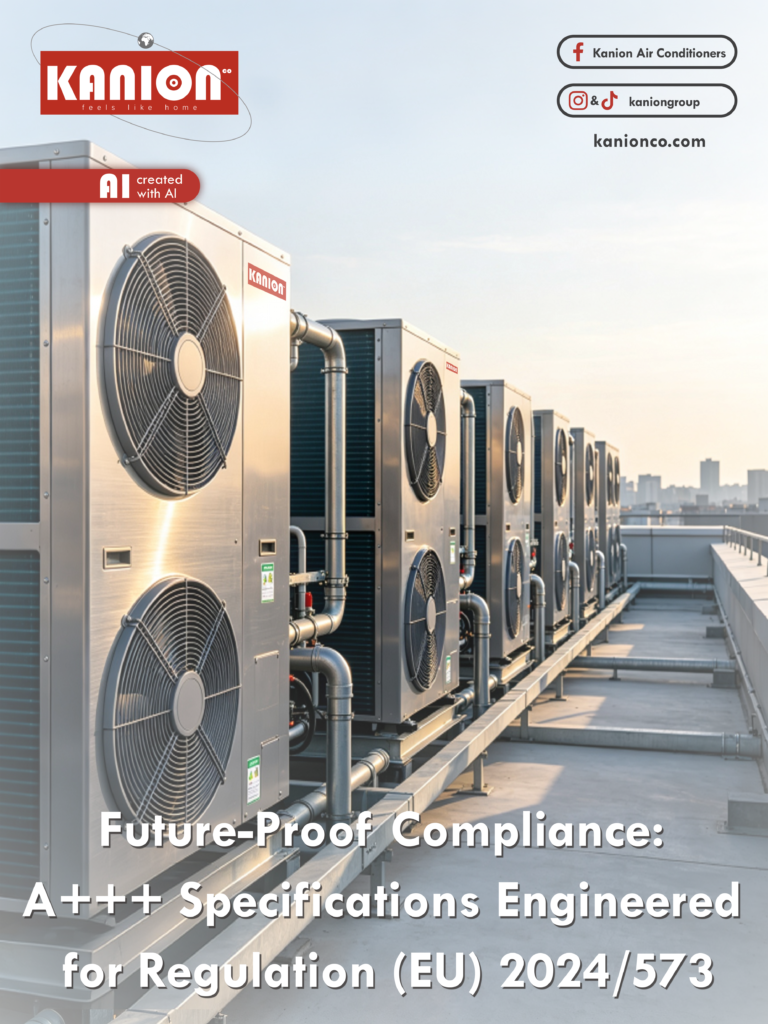
During the intense defense phase of a modern B2B contract, the most common roadblock a distributor or business developer faces from the engineering panel is: “Does your part-load efficiency data actually hold up under a real-world 46°C heatwave, or is this merely theoretical marketing data?”
Most distributors do not maintain an internal department of certified thermodynamics engineers ready to calculate metric tons of carbon displacement or draft 200-page localized procurement compliance attachments.
This exact constraint is why global manufacturers have transitioned toward an Authorized Technical Hub model, launching remote technical ecosystems like the K-Climate Hub. These platforms allow contractors to bypass the internal engineering bottleneck by providing immediate access to pre-certified data sheets, extreme ambient compliance logs, and verified carbon calculations that can be imported directly into formal tender submissions.
Winning sophisticated European HVAC tenders in 2026 does not require the largest internal engineering staff; it requires leveraging the correct technical partnerships. By aligning with partners that provide the unshakeable A+++ performance data required to win the bid, contractors can focus entirely on managing local stakeholder relationships and securing client trust. For more information on optimizing your next project proposal, visit our homepage or review our commercial systems directory.