Contents
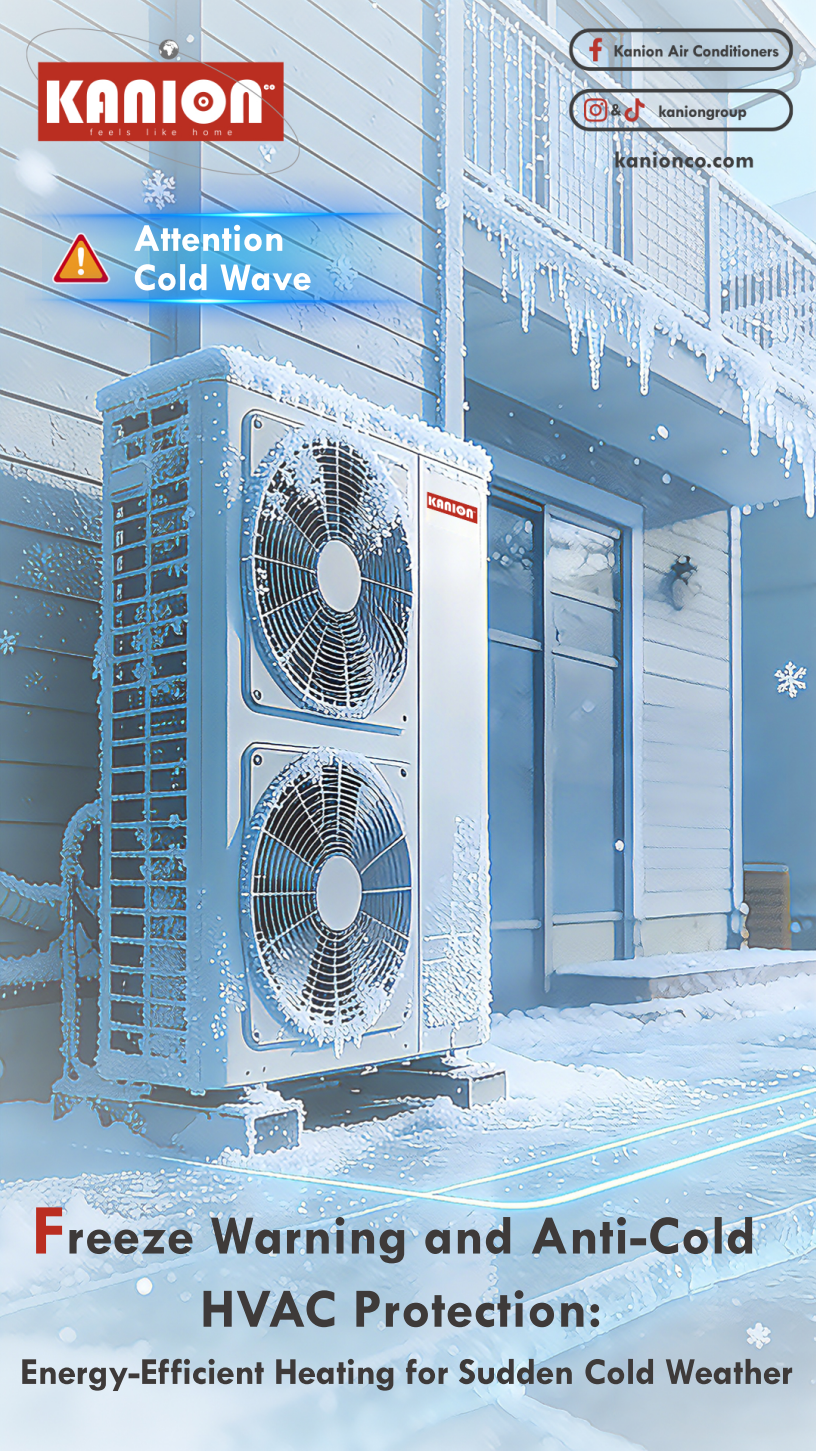
As weather patterns become more unpredictable, Freeze Warning has become an important search topic for homeowners, businesses, and property managers preparing for sudden cold weather. A freeze warning means temperatures are expected to fall to 32°F (0°C) or below for a long enough period to create real risk for plants, exposed pipes, and outdoor equipment. The National Weather Service uses this term during the growing season when freezing temperatures are expected to have meaningful impact.
For buildings in North America and Europe, sudden cold snaps can increase heating demand, reduce system efficiency, and put extra pressure on HVAC performance. That is why HVAC protection during freeze warning conditions is becoming a more important part of energy-efficient building management.
At Kanion Co, we use anti-cold as a product and marketing expression for stronger cold-weather performance, stable heating, and dependable comfort during seasonal transitions. In practical SEO terms, this connects closely with what users more commonly search for, including cold-weather HVAC, freeze protection, and energy-efficient heating. This article explains what a freeze warning means, how it affects HVAC systems, and why anti-cold HVAC solutions matter.
Key Takeaways: Why Freeze Warning and Anti-Cold HVAC Protection Matter
- A Freeze Warningmeans temperatures are forecast to drop to 32°F (0°C) or below for a sustained period.
- Freeze conditions can increase heating loads and affect HVAC system efficiency.
- Proper anti-cold HVAC protectionhelps maintain indoor comfort, improve reliability, and reduce unnecessary energy waste.
- Smart inverter systems can improve cold-weather heating efficiencyby adjusting output based on actual indoor demand.
- Buildings with better freeze protectionand climate-ready HVAC solutions are better prepared for sudden temperature swings.
Q&A: Quick Answers About Freeze Warning, Anti-Cold Protection, and HVAC Systems
Q1: What is a Freeze Warning?
A Freeze Warning is a weather alert issued when temperatures are expected to fall below freezing long enough to affect plants, pipes, and outdoor equipment. In many National Weather Service references, this threshold is 32°F or below.
Q2: Can freeze warning conditions affect HVAC systems?
Yes. Freeze warning conditions can make heating systems run longer, increase electricity demand, and create more challenging conditions for outdoor units, drainage systems, and exposed piping.
Q3: What does anti-cold HVAC mean?
In this context, anti-cold HVAC refers to HVAC solutions designed for better low-temperature performance, stronger heating stability, and more reliable comfort during sudden cold weather and freeze events.
What Is a Freeze Warning?
A Freeze Warning is issued when weather conditions are cold enough to produce widespread freezing temperatures. According to National Weather Service guidance, it generally means temperatures are expected to fall to 32°F or below for a meaningful period of time, especially during the growing season when damage is more likely.
Many people associate a freeze warning with agriculture and outdoor plumbing, but it also matters for heating system performance, building energy use, and HVAC protection. When temperatures drop quickly, indoor spaces require more heating capacity. If a system is not designed for variable weather conditions, energy consumption can rise while comfort stability falls.
This is why freeze warning searches increasingly overlap with questions about heating efficiency, cold-weather HVAC, and how to protect HVAC systems in winter or early spring cold snaps.
How Freeze Warning Affects HVAC Systems in Cold Weather
Freeze conditions can affect HVAC systems in several important ways. First, colder outdoor temperatures increase the demand for indoor heating, causing systems to run longer and often consume more electricity. Second, outdoor units and related components may face more stress during rapid temperature changes.
In residential properties, freeze events can increase the risk of issues involving exposed lines, drainage pathways, and nearby plumbing if protection is insufficient. In commercial buildings, sudden cold snaps may raise operating costs, reduce comfort consistency, and increase maintenance pressure if the heating system lacks strong low-temperature performance.
That is why cold-weather HVAC protection is not only about preventing failure. It is also about maintaining efficiency, improving system resilience, and keeping buildings comfortable when weather becomes less predictable.
Why Anti-Cold Heating Technology Matters for Energy Efficiency
Better Performance During Sudden Cold Weather
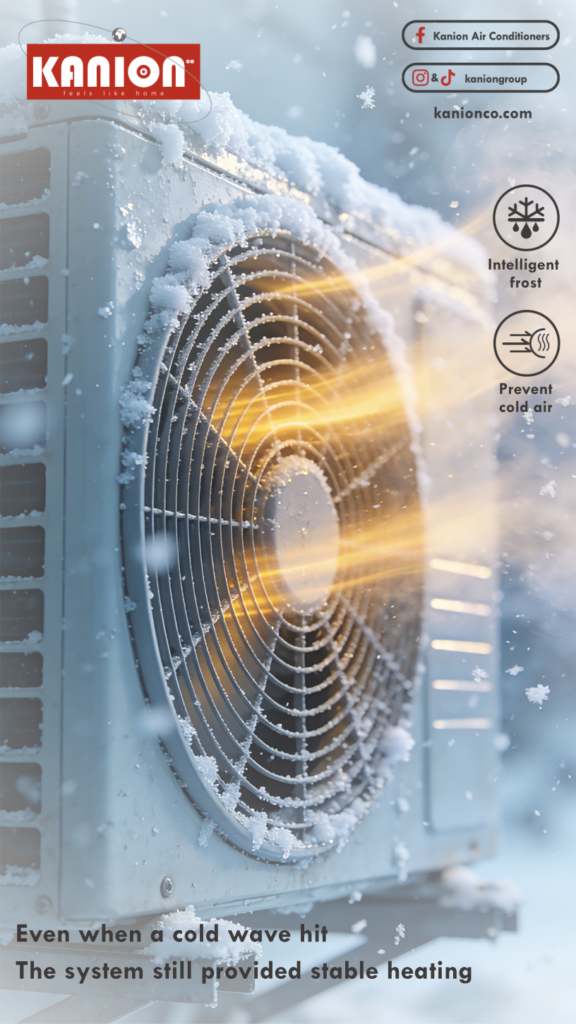
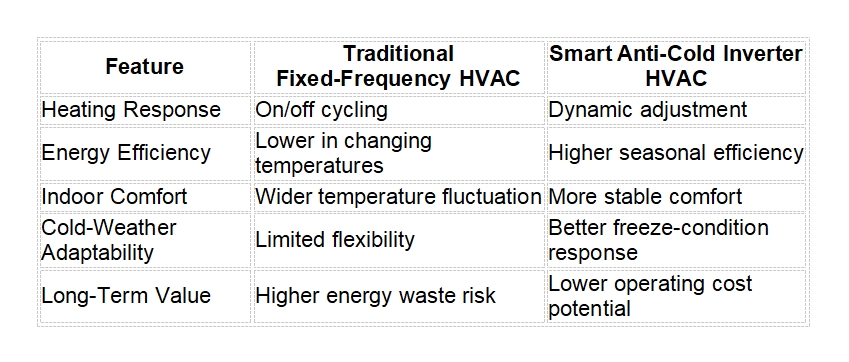
Traditional fixed-frequency HVAC systems can struggle to respond efficiently when outdoor temperatures change quickly. By contrast, anti-cold inverter HVAC technology supports more stable heating performance and better indoor comfort during freeze events.
Lower Energy Waste and More Stable Comfort
Smart inverter systems can match heating output more closely to real indoor demand. This helps reduce unnecessary cycling, improve heating efficiency, and support more consistent temperatures indoors.
Climate-Ready Value for Modern Buildings
Today’s buildings need HVAC systems that can handle both cooling in summer and stronger cold-weather heating performance during winter transitions. This improves year-round comfort and long-term operating value.
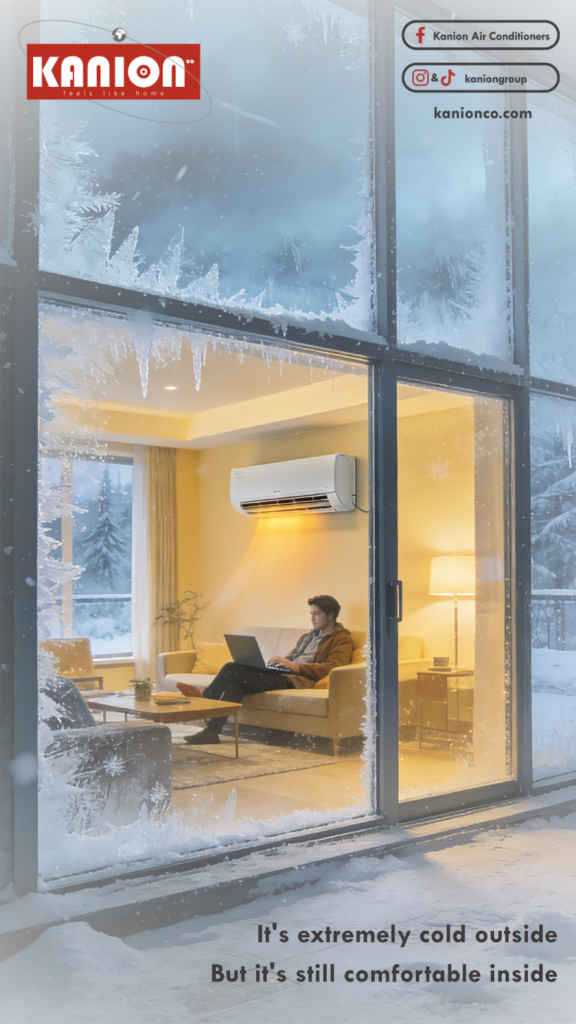
Freeze Protection for Homes and Commercial Buildings
Effective freeze protection starts with smart system design, dependable heating performance, and better seasonal adaptability. For homes, this means stronger indoor comfort, improved winter efficiency, and lower risk during sudden cold weather. For commercial projects, it means more stable operation, lower energy waste, and better support for long-term building performance.
As climate variability continues to affect both warm and cold regions, energy-efficient HVAC systems with anti-cold capability are becoming more valuable in both new construction and retrofit projects.
Traditional Heating Systems vs. Smart Anti-Cold Inverter HVAC
Kanion Co: Anti-Cold HVAC Solutions for Reliable All-Season Comfort
At Kanion Co, we design HVAC systems with a focus on energy efficiency, anti-cold performance, smart control, and all-season reliability. As weather becomes more variable, buildings need solutions that can respond to both summer cooling demand and winter heating challenges.
Our approach helps customers improve comfort, strengthen cold-weather protection, and reduce unnecessary energy use. From residential applications to commercial projects, Kanion Co supports a more sustainable and climate-ready future with smarter HVAC solutions.
The Future of Cold-Weather HVAC Is Smarter and More Efficient
The growing attention around Freeze Warning reflects a broader shift in how people think about building comfort and HVAC reliability. HVAC is no longer only about cooling performance. It is about year-round climate control, including better heating efficiency, freeze protection, and stronger response to sudden cold weather.
As homeowners and businesses look for better ways to reduce costs, protect equipment, and improve resilience, anti-cold HVAC systems will become increasingly important. At the same time, using the search language people naturally use — such as freeze warning, cold-weather HVAC, and energy-efficient heating — helps connect useful content with real user needs, which aligns with Google’s guidance for helpful, descriptive, people-first content.
Lorem ipsum dolor sit amet, consectetur adipiscing elit. Ut elit tellus, luctus nec ullamcorper mattis, pulvinar dapibus leo.