Contents
When the weather swings, your HVAC shouldn’t sweat it — or freeze up. Whether you’re in the icy north of Canada, the humid south of the USA, or the breezy coasts of southern Europe, choosing between an air-to-water heat pump and a split unit air conditioner can mean the difference between year-round comfort and seasonal regret.
This guide breaks down the facts, from real-world climate performance to long-term cost efficiency, so you can make the smartest choice for your home and budget — without the boring jargon.
The Two Contenders: What’s on the Table?
Air-to-Water Heat Pump (ATWHP)
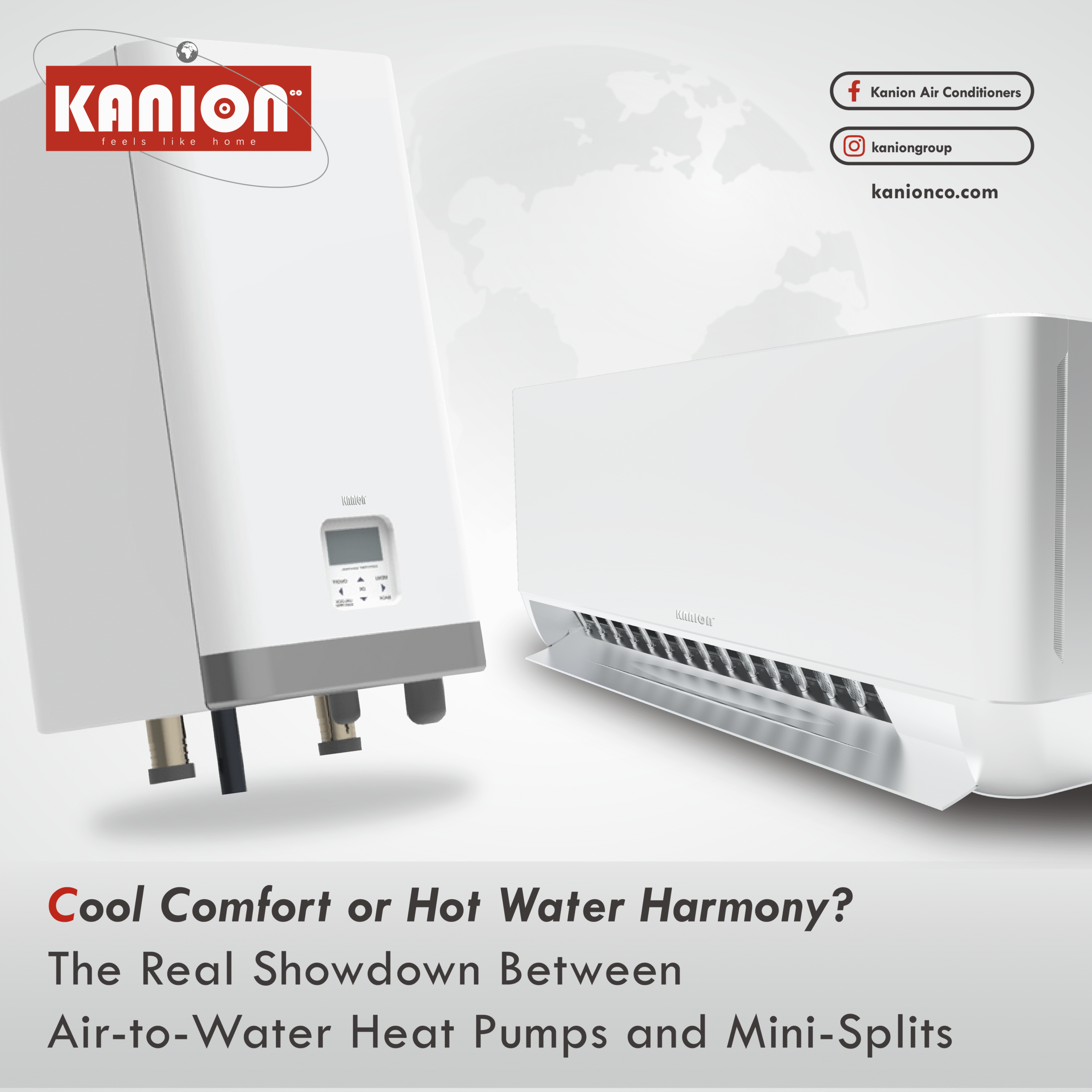
Think of it as the Swiss Army knife of climate control. It extracts heat from the air and transfers it into water, which can be used for radiant floor heating, fan coils, or domestic hot water (DHW). In cooling mode, it works in reverse. This is a natural fit for hydronic systems, offering whole-home heating and cooling without ducts.
Pros:
- Provides space heating, cooling, and DHW in one unit.
- Works well with existing hydronic infrastructure.
- Higher efficiency in colder climates when paired with low-temperature emitters.
Cons:
- More complex installation (especially in retrofits).
- Higher upfront cost.
Mini-Split Heat Pump (a.k.a. Ductless Split AC Unit)
These are the plug-and-play champions of modern cooling and heating. Each indoor unit connects to an outdoor compressor, providing zoned comfort without ductwork.
Pros:
- Fast, flexible installation.
- Great for homes without existing ductwork.
- Ideal for cooling-heavy regions.
Cons:
- No DHW capability.
- Multiple indoor heads needed for whole-home coverage.
Climate Matters: Why Your Zip Code (or Postal Code) Changes Everything

One of the biggest mistakes homeowners make is ignoring how their air conditioning system performs in their specific climate.
- Cold North (USA & Canada):ATWHP shines because it can deliver hot water and space heating efficiently even in sub-zero winters.
- Hot South (USA & EU):Mini-split systems excel in cooling-dominated climates, with unbeatable SEER ratings and rapid cooling.
- Mixed Zones:Either can work, but the balance of cooling vs heating needs is key.
Funding and Incentives
USA:
- Federal tax credits up to 30% (capped at $2,000 for heat pumps).
- Many state rebates (especially in the Northeast).
Canada:
- Canada Greener Homes Grant: Up to CAD $5,000.
- Provincial incentives for cold-climate heat pumps.
EU:
- Varies by country. Germany, Austria, and Switzerland offer generous ATWHP rebates.
- Southern EU countries often subsidize split unit air conditioners for energy-efficient cooling.
Real-World Climate & Cost Comparison

Assumptions:
- Electricity price: US $0.15/kWh, Canada CAD $0.14/kWh, EU €0.20/kWh (2024 averages).
- COP: Mini-split 3.2 avg., ATWHP 3.6 avg.
- Load includes heating & cooling demand for a well-insulated 150 m² home.
Choosing by Application
- Need central air conditioning with hydronic compatibility?→ ATWHP wins.
- Want fast installation & zoned comfort?→ Mini-split all the way.
- Cold winters, mild summers?→ ATWHP.
- Hot, humid summers, light heating needs?→ Mini-split.
The Verdict: Making Your Choice

If you want a home air conditioner that also provides DHW and plays nicely with hydronics, the air-to-water heat pump is a smart long-term investment. If you need fast installation, powerful cooling, and zoned comfort, a split AC unit or ductless mini-split might be the better path.
Need a hand figuring it all out? Visit Kanion Co at https://kanionco.com/ and explore the most efficient, cost-effective solutions for your needs. You can also check out K-Climate Hub at https://kclimatehub.com/ for more expert insights on sustainable climate control. Learn more about Split systems at: https://youtu.be/DXW4El_5Tow?si=DbeM9myl00n63p11. Know more about ATWHP at: https://www.youtube.com/watch?v=0Y73k4yqDKM. Together, these resources will help you find the perfect fit for your climate, building, and budget.