Contents
Moving Beyond Hardware: Why Your Business Model Must Evolve for the European Union
For decades, the global HVAC industry operated on a relatively simple premise: manufacture a reliable unit, offer a competitive price, and ship it to a willing distributor. However, as we approach 2026, the landscape for HVAC market entry 2026 has undergone a tectonic shift. The era of “selling boxes” is officially over. Today, entering or maintaining a presence in the European Union requires a sophisticated understanding of a regulatory ecosystem that is as complex as the engineering behind the compressors themselves.
At Kanion Co, we have observed that many distributors are still operating with a 2020 mindset in a 2026 reality. The introduction of Regulation (EU) 2024/573 has not just “updated” the rules; it has rewritten the manual for international trade. If your business is not prepared for the digital, legal, and human capital requirements of this new era, you risk more than just fines—you risk total market exclusion.
The Digital Audit – Is Your "Digital Passport" Ready?
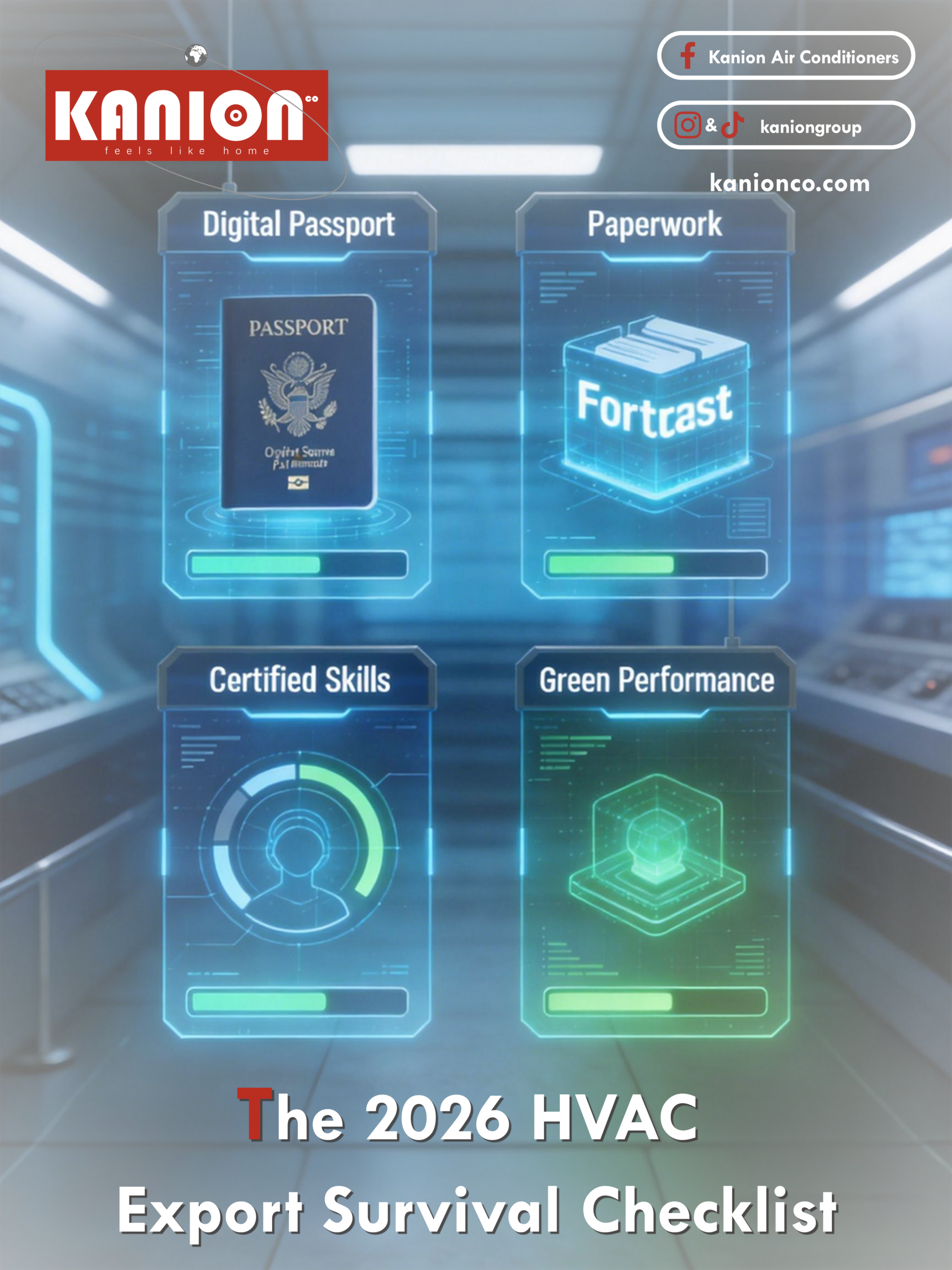
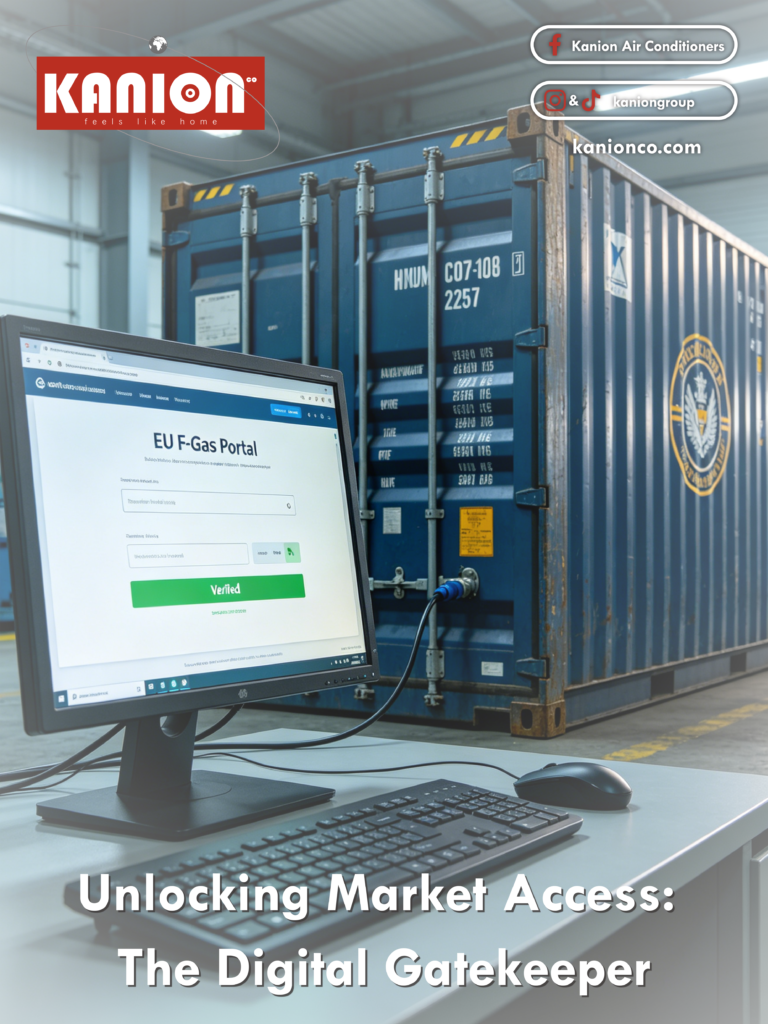
The first barrier to successful HVAC market entry 2026 is no longer the customs office at the port; it is the digital interface of the F-gas Portal. This platform now acts as a mandatory gatekeeper for every single kilogram of refrigerant that crosses a border.
- The Registration Trap:Many importers mistakenly believe that registration is a “one-and-done” task. In reality, the Commission’s F-gas Portal requires active management. An outdated profile or a minor clerical error in your digital identity can lead to immediate shipment seizures.
- Quota Sovereignty:Quota management is the lifeblood of your inventory. Brands that thrive in 2026 will be those that integrate their sales forecasts directly with their quota allocations. At Kanion Co, we help our partners treat their digital registration as a strategic asset, ensuring that their license to operate is never in jeopardy.
The Paperwork Fortress – Verification as a Shield
In the past, documentation was seen as a necessary evil. In the context of HVAC market entry 2026, it has become a competitive shield. If you cannot prove your compliance through a verified audit trail, you simply do not have a product to sell.
- Independent Verification (The New Standard):Under the current regime, “taking your word for it” is no longer acceptable. Annual reports on HFC flows now require independent verification by portal-registered auditors. This is a massive shift for many small-to-medium distributors who are used to informal record-keeping.
- The Burden of Proof:Every unit you sell must be traceable back to its quota origin. This “Compliance Logic” ensures that the market remains fair, but it also penalizes those with weak document control. Establishing a robust internal audit system is now a vital part of your operational cost.

The Installation Gap – Solving the Human Capital Crisis
Perhaps the most overlooked bottleneck in HVAC market entry 2026 is the lack of certified personnel. You can have the most energy-efficient, eco-friendly hardware in the world, but it is worthless if no one in your region is legally allowed to install it.
- Certification Alignment:The EU framework has explicitly tied technician certification to the latest safety and environmental standards. This means your installation teams need specialized training in handling safety standards for A2L refrigerants and complex blends.
- The “Support-First” Sales Model:Sales are no longer driven by the showroom; they are driven by the training center. Distributors who can provide certified training support to their installers will see a direct correlation with their sales volume. We believe that empowering the person with the wrench is just as important as supporting the person with the purchase order.
Environmental ESG as a Commercial Benchmark
We are entering an era where “Leak Prevention” is a marketing term. The EU’s focus on preventing emissions throughout the unit’s entire lifecycle has turned environmental stewardship into a commercial benchmark.
- Lifecycle Responsibility:From the moment a unit is shipped to the day it is decommissioned, its environmental footprint is tracked. Stricter rules on recovery and leak checks mean that your service quality is now a public reflection of your brand’s integrity.
- Winning Corporate Trust:Commercial clients are increasingly looking for partners who can help them meet their own ESG goals. Offering a product that is backed by superior leak-prevention protocols is a major selling point in the B2B sector of the HVAC market entry 2026 landscape, especially as the push for global decarbonization in cooling systems continues to reshape the industry.
FAQ: Survival Strategies for 2026
Q1: What is the single biggest cause of shipment delays in 2026?
A1: Administrative misalignment in the F-gas Portal. Even if the hardware is perfect, a failure to match the customs data with the portal’s license records will lead to immediate delays. HVAC market entry 2026 requires perfect digital synchronization.
Q2: How has the role of the HVAC supplier changed?
A2: A supplier is no longer just a manufacturer; they are a regulatory consultant. You need a partner who understands the “Compliance Logic” of the EU market and can provide the necessary documentation and verification support.
Q3: Is independent verification required for small-scale importers?
A3: Generally, yes. The thresholds for independent auditing have been lowered to ensure market-wide data integrity. You should assume that every report you file will eventually be subject to third-party scrutiny.
Q4: Why should I focus on installer training if I only handle sales?
A4: Because “Installation Readiness” is a prerequisite for sales. If your local market doesn’t have the certified expertise to handle modern A2L units, your inventory will sit in the warehouse.
Q5: How does Kanion Co facilitate this transition for new partners?
A5: Through our K-Climate Hub, we offer a centralized repository of regulatory updates, technical manuals, and compliance templates. We provide the “Knowledge Infrastructure” that allows you to navigate the HVAC market entry 2026 hurdles without slowing down your business.
Q6: Does this regulation apply to replacement parts?
A6: Yes. The regulatory framework covers the entire ecosystem, including the gases used in servicing and the components used for repairs. Total compliance means managing the entire lifecycle of the system.
Conclusion: The Future Belongs to the Prepared
The challenges of HVAC market entry 2026 are significant, but they are not insurmountable. For the proactive distributor, these regulations represent an opportunity to clear the market of lower-quality, non-compliant competitors. By embracing digitalization, investing in human capital, and prioritizing documentation, you can turn compliance from a burden into a powerful competitive advantage.
At Kanion Co, we are committed to being more than just a source of hardware. We are your partner in navigating this historical shift. Together, we can ensure that your transition to the next generation of HVAC technology is not just compliant, but commercially superior.
Ready to secure your market position? Contact us today for a strategic consultation on your 2026 export readiness.