Contents
The global HVAC industry is entering 2026 under growing cost pressure. Across major markets, air conditioner manufacturers are facing a more difficult pricing environment driven by rising raw material costs, higher freight expenses, and ongoing geopolitical uncertainty. Recent reporting shows that brands including Daikin, Voltas, and LG have announced or implemented air-conditioner price increases in the range of 5% to 15% during the 2026 pre-summer selling season. These increases were linked to higher copper and other input costs, freight charges, and broader supply-chain pressure.
For buyers, importers, distributors, and project planners, this is more than a seasonal adjustment. It is a sign that the HVAC market is being reshaped by deeper structural challenges. At Kanion Co, we see this moment as a reminder that long-term value, energy-efficient HVAC, and supply-chain resilience matter more than ever.
Key Takeaways: Why Air Conditioner Prices Are Rising
Air conditioner prices are rising in 2026 because manufacturers are facing pressure from multiple directions at once. Public reports indicate that major brands such as Daikin, Voltas, and LG have raised or announced price increases in the range of 5% to 15%. The main drivers include more expensive raw materials, especially copper, along with higher freight costs and ongoing supply-chain disruption.
For the HVAC industry, this is not just a short-term pricing issue. It reflects a broader change in how products are sourced, manufactured, transported, and sold in a more volatile global market.
Q&A: Quick Insights into 2026 HVAC Market Pressure
Q1: Why are air conditioner prices increasing in 2026?
Because manufacturers are facing higher costs for copper, aluminium, freight, and supply-chain operations. Multiple reports in March 2026 described room AC price hikes of around 5%–15% across major brands.
Q2: Is copper really a major factor in HVAC price pressure?
Yes. Copper is one of the most important HVAC input materials, and Reuters reported that analysts’ median 2026 copper forecast rose to $11,975 per metric ton, the highest annual consensus in that Reuters poll.
Q3: Are freight and geopolitics affecting the HVAC industry too?
Yes. Reuters reported that air freight rates on some routes had risen by as much as 70% amid Middle East conflict-related disruption, showing how geopolitical instability can directly raise logistics costs.
Why AC Manufacturers Are Facing Higher Costs
One of the biggest reasons behind rising air-conditioner prices is the growing cost of manufacturing inputs. HVAC production depends heavily on copper, aluminum, electronics, compressors, and globally sourced components. When several of these costs rise at the same time, manufacturers are forced to make difficult decisions around margins, pricing, and product positioning.
That is exactly what the market is seeing in 2026. Reports from the air-conditioner sector show brands adjusting prices ahead of peak summer demand as they respond to higher raw material and logistics costs. For companies operating in highly competitive markets, this creates pressure not only on margins, but also on inventory planning, channel relationships, and consumer demand.
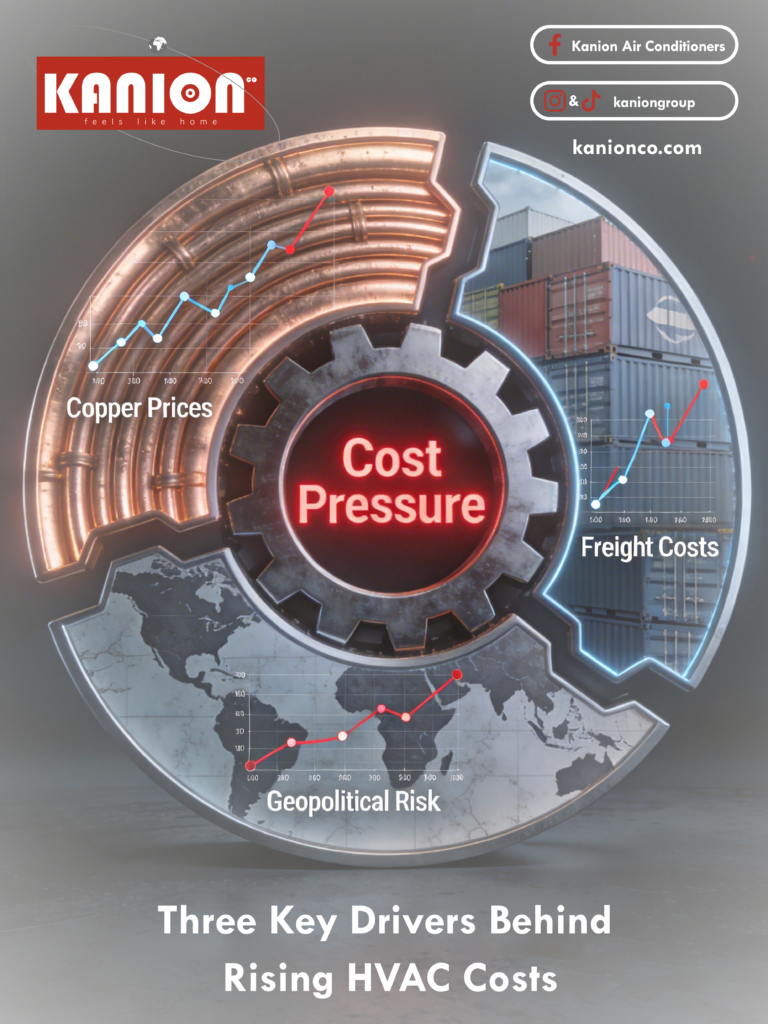
Copper Prices, Freight Costs, and Geopolitical Risk
Copper remains one of the most important pressure points in HVAC manufacturing. It is widely used in coils, tubing, motors, and electrical systems, so any increase in copper prices directly affects production costs. Reuters reported in January 2026 that the median annual copper forecast rose to $11,975 per metric ton, the highest annual consensus in that poll and the first time above $11,000.
Freight is another major challenge. Global logistics costs remain exposed to shipping disruption, route instability, insurance pressure, and regional conflict. Reuters reported in March 2026 that air freight rates had risen by as much as 70% on some routes as conflict blocked trade corridors and disrupted transport flows.
For HVAC manufacturers, the combination of higher copper prices, freight volatility, and geopolitical uncertainty creates a difficult operating environment. It affects procurement planning, production cost control, delivery timing, and distributor pricing strategy.
What Rising HVAC Prices Mean for Buyers and Distributors
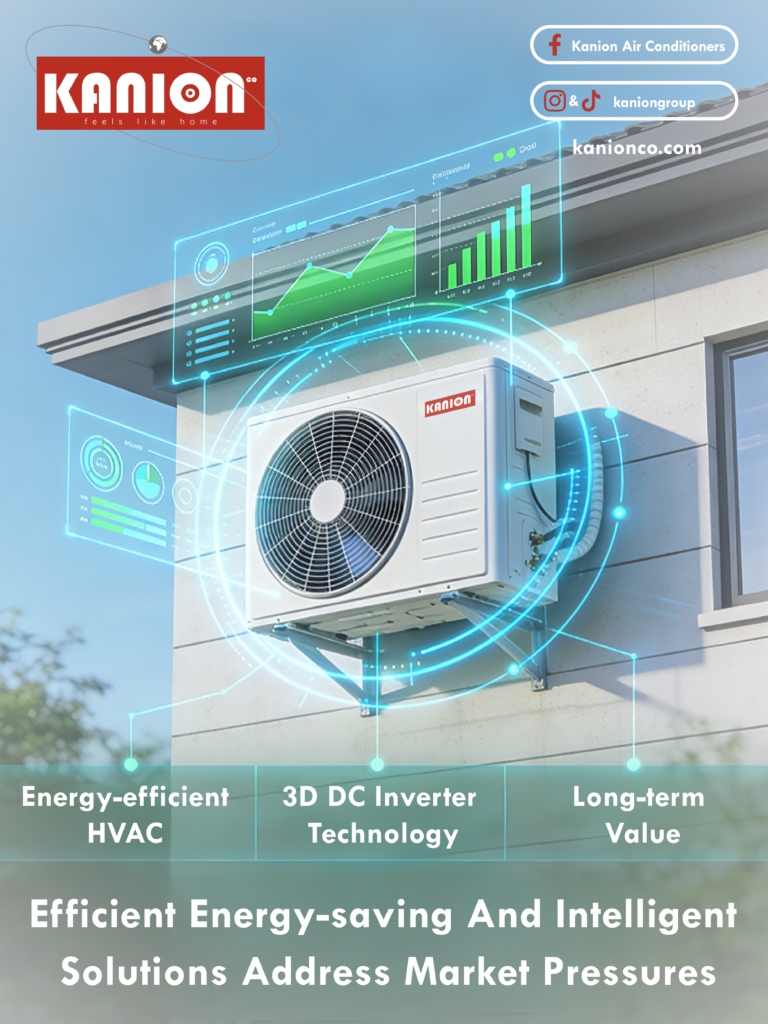
When equipment prices rise, energy efficiency becomes even more important. Higher-efficiency systems can help offset market price pressure by lowering electricity use and improving long-term operating economics.
This is one reason the HVAC conversation in 2026 is not only about inflation. It is also about how brands can deliver smarter value through inverter technology, better system design, and stronger real-world performance. In a market shaped by rising copper costs, freight volatility, and tighter margins, efficiency is no longer just a selling point. It is a strategic advantage.
Kanion Co: Responding to Market Pressure with Smarter HVAC Solutions
At Kanion Co, we recognize that today’s HVAC market is being reshaped by rising material costs, supply-chain disruption, and increasing pressure on global manufacturing and logistics. In this environment, customers are no longer evaluating products on price alone. They are looking for technology leadership, operational stability, and long-term value that can remain competitive under changing market conditions.
Even in a more challenging cost environment, Kanion Co remains committed to advancing new technology that creates practical market value. Solutions such as Hyper Guard reflect this direction — combining stronger technology, more dependable protection, and better overall product competitiveness while maintaining a more cost-efficient approach.
Just as importantly, our focus extends beyond product innovation to manufacturing strength. Through assembly line resilience, efficient production planning, and a commitment to sustainable product development, Kanion Co continues to strengthen its ability to respond to market volatility without losing sight of quality, performance, or customer value.
As industry pressure continues to rise, our strategy remains clear: to help partners and customers move forward with HVAC solutions that are smarter, more resilient, and better aligned with the future of the market.
The Future of the HVAC Industry in a High-Cost Era
The 2026 HVAC market is being shaped by a new mix of challenges: higher copper costs, freight uncertainty, geopolitical risk, and stronger cost pressure across the supply chain. Public price increases from major brands are one visible sign of this shift.
But the bigger story is adaptation. In a higher-cost era, success in HVAC will depend on product efficiency, supply-chain resilience, and the ability to deliver better long-term value. For buyers and brands alike, the future belongs to smarter solutions — and Kanion Co is committed to building them.